
Erstwhile Okie on St. Mark's Place. "That which hath been is now; and that which is to be hath already been; and God requireth that which is past."
· 3 min read
1 years ago
Have had a miserable couple weeks; all of it (as always) first-world problems that gnaw at me until I manufacture genuine crises. Then, having it out of my system, I crawl gradually back into the quiet life of dull daily habits which I remind myself is a life 99% of the world would swap for.
In the midst of the crawl-back, I reluctantly return to a daily Bible reading. Of course I know it's critical. Of course I know it's the answer. But I never think I'll get anything from it, especially since my current reading plan is a survey of minor prophets.
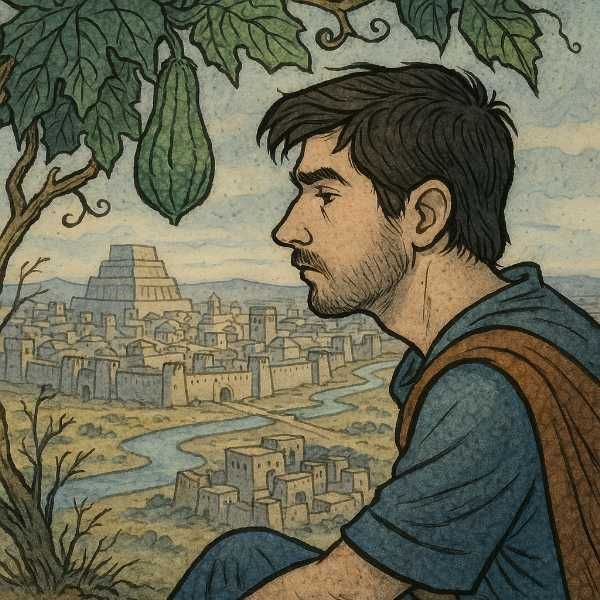
Just the same, I picked back up today and it was the Book of Jonah, which every kid who ever spent a day in Sunday School knows since he got eaten by a fish or a whale or something. But that's really a pretty minor detail.
The real story is that God tells him to go save a group of people he hates and he tries his best not to. When left with no choice, he (sort of) does what God tells him to do, it works, and Jonah is incensed because he does not want them to be forgiven; they don't deserve it.
Ultimately God tries to give Jonah an illustration by providing him shade from the sun then killing the thing that provides the shade. Jonah is upset and God asks essentially whether he should care about the loss of the thing shading him more than a group of people who did not know any better than to be the sort of people Jonah hated.
It's a nice lesson about having compassion for enemies, but I've never really struggled with that. I forgive everyone everything because:
1) I tend to avoid situations where anyone could wrong me, and
2) I don't think I have sufficient value that it would be anything other than absurdly self-important to hold a grudge.
But this morning, I saw the story through the prism of when the enemy is yourself.
I could go on, and I usually do, but I'd just encourage you to read it (the Book of Jonah has only four, very short, books--maybe a ten minute read).
I'll only say that God does not need our guilt or our judgment, He needs our obedience. And even that, He can wait on. Nearly every action of Jonah's is disobedient in this book. And in a sense he recognizes it, and believes that God's just response should be to kill him. He has himself thrown into the sea, and eventually commands God to just kill him outright.
But his justice is not God's. And ultimately, he is left with a much greater challenge: to accept God's compassion.
For me at least, that feels easy to do unto others, but when I see myself as the wicked people undeserving, and also myself as the person demanding divine punishment, I find the real challenge.
The thing that comforted me most is in the last verse when God asks why he should not spare a city full of people who "cannot discern between their right hand and their left hand".
When I hate myself, I think I ascribe a certain importance. It reminds me of crying once when I was very little when my dad opened a present that had been labelled as coming from me, when in fact I hadn't done anything to help getting it. I didn't even know what it was. As a father now, I know that sort of response from my child would make me sad.
Today too, though I consider myself a wise, mature person much more culpable in his sins, I believe that I am still, in God's eyes, a child who "cannot discern between their right hand and their left hand".
· 1 min read
1 years ago

Lent has been wild and wonderful and unexpected with no shortage of opportunities to be (like C.S. Lewis) Surprised by Joy. In the midst of all that's gone on and all that remains in the final days of Holy Week, it's amazing to finish Nicky Gumbel's one-year devotional read-through of the Bible (which I think I've been working on through fits and spells for 2.5-3 years... 😳). This is the third read-through I've done and it's always a strange feeling to come to the end.
· 1 min read
2 years ago
Reading through 2 Samuel I'm struck by the similarity between David's feelings for Absalom and God's for His people.
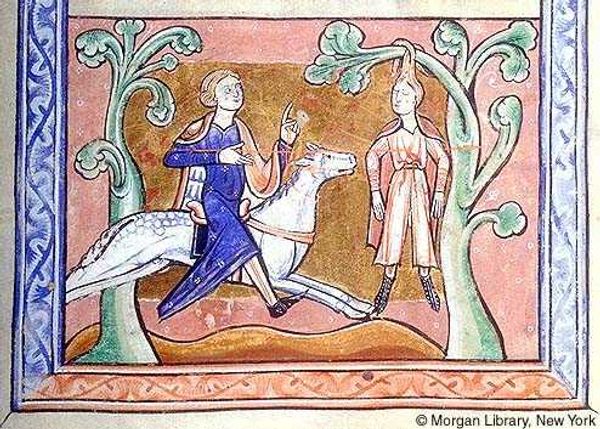
[33] And the king was much moved, and went up to the chamber over the gate, and wept: and as he went, thus he said, O my son Absalom, my son, my son Absalom! would God I had died for thee, O Absalom, my son, my son!
Absalom had no redeeming qualities, and died justly (hanged and pierced Christlike from a tree no less) in the midst of rebellion against his good and loving king and father. Yet in spite of it, David wished he could have died in his place.
Notwithstanding thou mayest kill and eat flesh in all thy gates, whatsoever thy soul lusteth after, according to the blessing of the LORD thy God which he hath given thee: the unclean and the clean may eat thereof, as of the roebuck, and as of the hart.
· 2 min read
3 years ago
I've undertaken reading through the Bible in its entirety, which I haven't done in a few years. It's inevitably a faith-challenging experience because--to really distill it:
1. I have long since committed to fundamentalism and the view that the Bible is literal and inerrant.
2. The Old Testament is ridiculous.
So doing this kind of study, as opposed to just reading the more sort of guiding, nourishing stuff of the New Testament can get me into a mode of my religious life being more intellectual than spiritual. It led me, this morning, as I was praying before doing a reading, to ask God why He prizes faith so much. Why would He rebuke the disciple who wanted to see His wounds before believing He was truly resurrected?
Outside of one's own religion, I don't think anyone ever sees blind unquestioning faith as a virtue. And God encourages reason, calling us to "be ready always to give an answer to every man that asketh you a reason of the hope that is in you."
One of the things that past readings through the Old Testament did give me though, was astonishment at how little miracles can move people. The very people that saw the Red Sea parted and walked through it with Moses in very short order questioned the very existence of God. And is that really any different from me coming into consciousness every morning, drawing breath that puts some parts of the ether into my blood and lends me the ability to see, speak, move?
But still, I tried to go beyond my own mental justifications and asked God to give me something in my reading as an answer. Knowing that my reading was something He smiled on, serving as a knock on the door that He promises to answer.
And surely enough, I was satisfied with the New Testament chapter I was given, in which the disciples--not one, but all of them, apparently--ask Jesus a question that I think was very similar, in a sense, to the one I was asking: Why speakest thou unto them in parables?
His answer, from Matthew 13:11 - 17 is worth reading (Since, you know, they're the words of Christ), but in particular I appreciated:
By hearing ye shall hear, and shall not understand; and seeing ye shall see, and shall not perceive: [...] But blessed are your eyes, for they see: and your ears, for they hear.
[...]
many prophets and righteous men have desired to see those things which ye see, and have not seen them; and to hear those things which ye hear, and have not heard them.
#Proverbs29 #Proverbs29:13
Gotta' turn up the upload quality on this app...